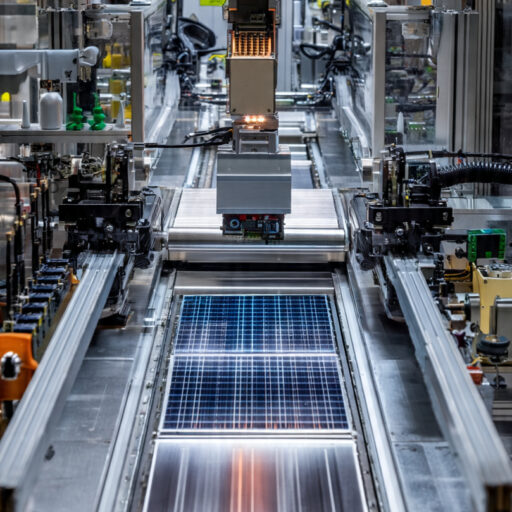
Next-Generation Electromagnetic Power Recovery for EV Platforms KERS
As the global electric vehicle (EV) market shifts toward mass adoption, the two primary bottlenecks remain energy recovery efficiency and manufacturing sustainability. Traditional motor and recharge systems rely heavily on expensive rare-earth materials and face significant thermal energy loss. Our solution introduces a modular, high-efficiency architecture designed to integrate seamlessly into existing and future EV powertrains.
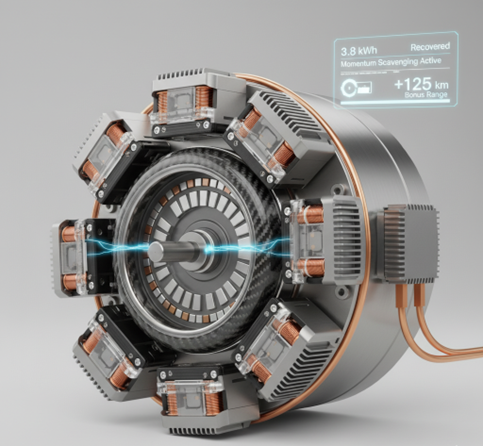
In a standard motor, the stator and rotor are optimised for propulsion. However, at the end-turns of the motor or along the spinning drive shaft, there is a massive amount of “uncaptured” kinetic and magnetic energy. In our concept design, we create a secondary Generator Effect that is physically decoupled from the main motor windings, allowing us to harvest energy without interfering with the primary drive logic.
Solid-State Coastal Thermal Harvester
We have engineered the world’s first Solid-State Industrial Thermal Harvester. By removing the two most notorious points of failure in solar thermal systems, mechanical tracking motors and friction-based rotational bearings, we have created a robust, set-and-forget rooftop appliance. It is purpose-built to survive the harsh, saline, and humid coastal industrial belts of most regions, while providing a sub-6-month payback period against diesel fuel.
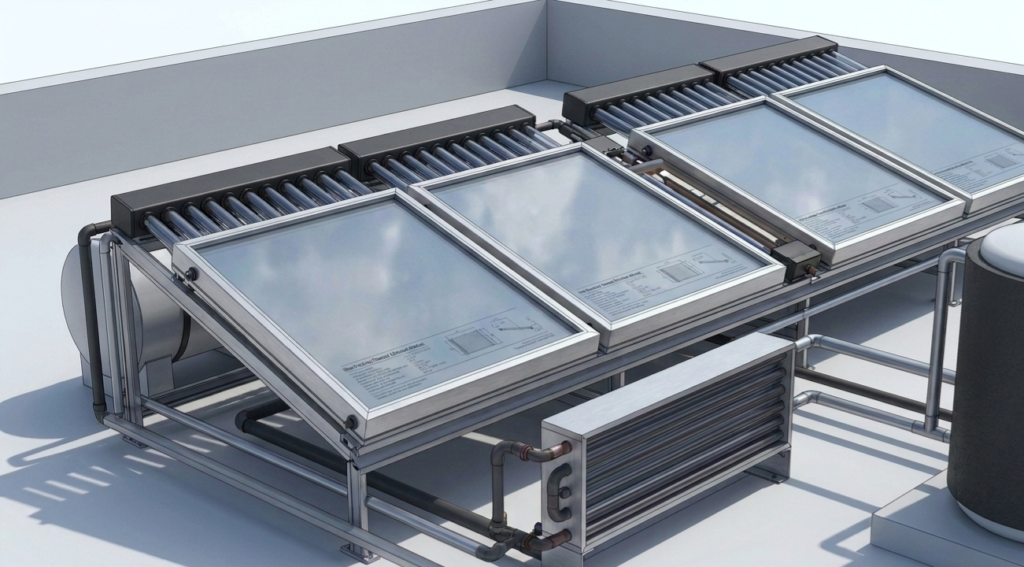
Instead of pivoting heavy collectors via motorized gearboxes, our module features a curved, stationary UV-stabilized rigid acrylic Fresnel lens shield. The internal optical micro-geometry acts like a light funnel, channelling incoming sunlight directly onto a fixed central receiver tube across a wide 160° acceptance angle. It captures peak irradiance throughout the day without a single motor.
The KinetiFlex System
The KERS Advantage: Energy Neutrality
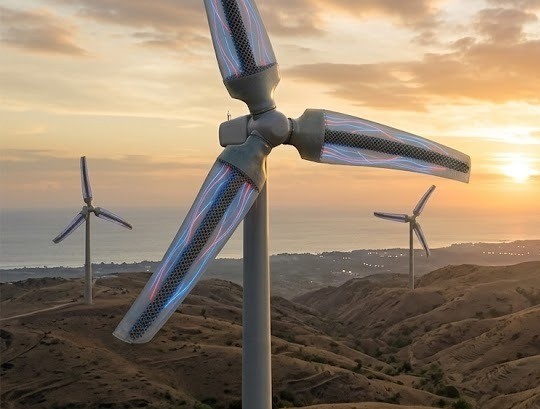
The industry’s biggest critique of active technology is the power drain. We have solved it. By integrating a Kinetic Energy Recovery System (KERS) directly into the hub, our system captures the violent, destructive energy of wind gusts and stores it. We then use that captured energy to power the blade’s transformation.
It is a blade that thinks and moves. Like a bird of prey adjusting its wings in flight, KinetiFlex morphs its shape in real-time to capture the maximum possible energy from every gust.
The KinetiFlex System represents the single greatest leap in wind propulsion since the invention of the composite blade. By integrating the self-correcting intelligence of a KERS-driven SMA scaffold with the indestructible resilience of a Silane-bridged hydrogel skin, we have created a turbine that doesn’t just endure the environment, it masters it. This is a system that captures the lost energy of turbulence, operates in near total silence to unlock restricted urban markets, and protects the high value drivetrain from the catastrophic fatigue that plagues our competitors. We are offering more than a technical upgrade, we are offering an energy neutral, self-optimizing asset that lowers LCOE while extending the operational life of the entire wind farm. KinetiFlex isn’t just a better way to catch the wind, it’s the definitive roadmap to a resilient, high-yield energy future.
The World’s First Full-Spectrum Hydrogen Range Extender for EVs
To transition Electric Vehicles from “Grid-Dependent” to “Energy-Autonomous.” By utilising the entire solar spectrum, not just visible light, we turn the vehicle’s roof into a high-efficiency hydrogen fuel factory that works while you drive and while you are parked.
Light passed through a prism, or more broadly, spectral splitting technology, can significantly assist in hydrogen energy production. By separating sunlight into different wavelengths, we can direct high-energy photons to produce electricity while using low-energy photons to generate heat, both of which are then used simultaneously to split water more efficiently.
While others have built the “Prism-Hydrogen” engine, our innovation lies in the specific mobile application:

Laminar Flow in Motion: Most SSPVTH research assumes a stationary lab bench. Our plan to manage slosh and vibration for a vehicle is a relatively unexplored engineering niche.
On-Board Data Logic: Using an ESP32 for mobile hydrogen telemetry is a modern maker approach that bridges the gap between high-level physics and practical automotive DIY.
We are not just following a trend; we are taking high-level spectral intelligence and applying it to the consumer vehicle market, which is still largely focused only on batteries